What Is Centralized Attendance Data?
Centralize biometric and mobile attendance with Synktime to reduce errors, simplify HR work, and ensure accurate, compliant payroll every month.
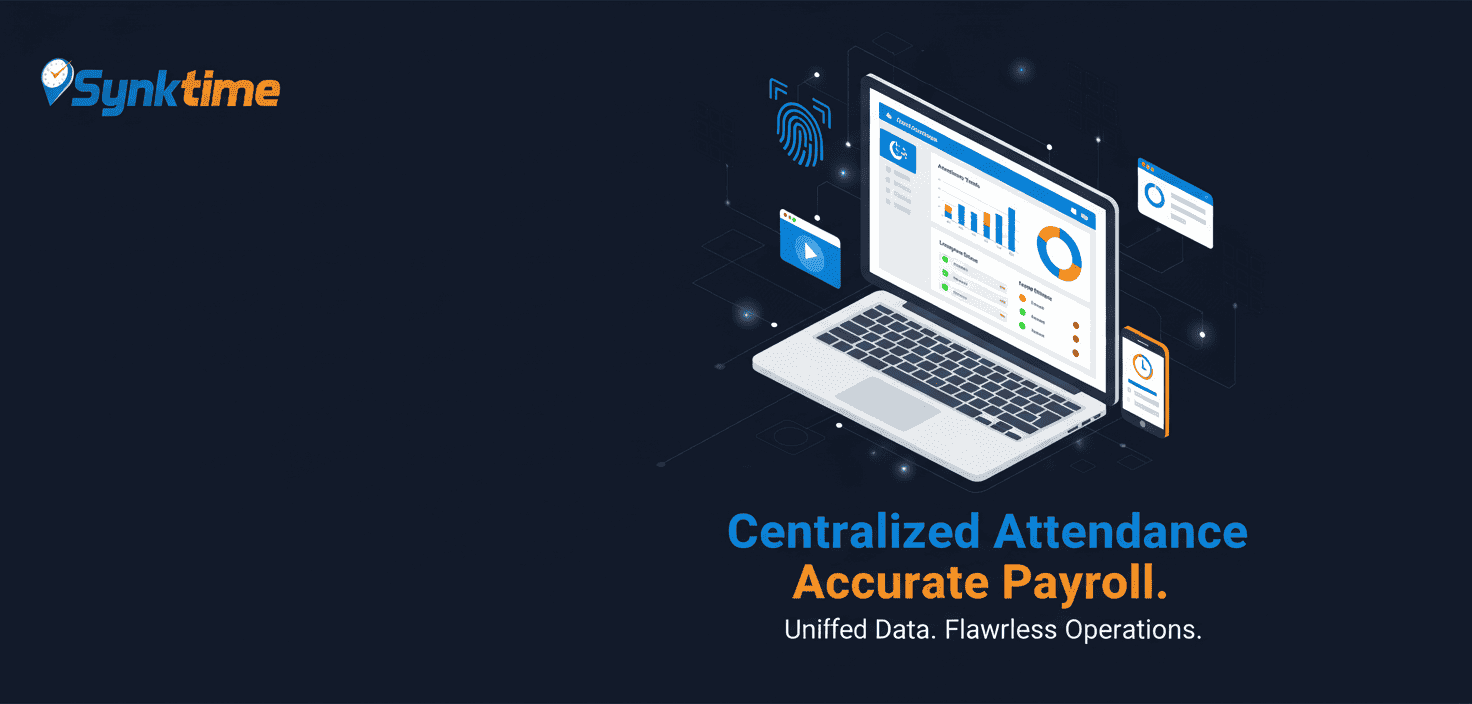
What Is Centralized Attendance Data?
Centralized attendance data means:
- All employee in/out times
- Leaves, on-duty, and permissions
- Shift details and overtime are stored, processed, and managed in a single system, instead of being spread across:
- Multiple biometric devices
- Different branches or locations
- Various mobile or web apps
- Manual Excel files
With a platform like Synktime, every attendance event whether captured from biometric machines or mobile/web attendance flows into one dashboard. HR and payroll teams then work from one source of truth, not multiple conflicting files.
The Problems Caused by Scattered Attendance Data
When attendance is not centralized, HR and payroll teams face recurring issues.
1. Inconsistent and Conflicting Records
Different sources often don’t match:
- Biometric logs say one thing
- Manual corrections say another
- Remote staff attendance sits in a separate system
Result:
- Confusion over who was present, late, or absent
- Repeated back-and-forth between HR, managers, and employees
- Increased risk of incorrect salary payments
2. Heavy Manual Work Every Month
Without centralized attendance, HR teams typically:
- Download logs from multiple devices
- Merge them manually in Excel
- Fix missing punches and timing errors by hand
- Prepare separate reports for each location or department
This manual consolidation is time-consuming and error-prone, especially for organizations with multiple branches or a large workforce.
3. Payroll Errors and Employee Disputes
Scattered attendance data often leads to:
- Wrong working hours recorded
- Incorrect overtime calculations
- Unjust loss of pay (LOP) or leave deductions
This directly impacts:
- Employee trust in HR and management
- The number of salary-related queries and disputes every month
- Overall employee satisfaction and morale
4. Poor Visibility for Management
When attendance data is fragmented:
- Managers can’t see a real-time view of who is present, absent, or late
- It’s hard to track patterns of absenteeism or late coming
- Decisions about staffing, shifts, and productivity are based on guesswork instead of data
How Centralized Attendance Data Improves Payroll Accuracy
Centralization is not just a technical upgrade; it directly improves payroll quality.
1. One Source of Truth for Attendance
With a centralized system:
- All records biometric, web, and mobile are merged and standardized
- HR no longer has to compare multiple sheets or logs
- Payroll teams receive clean, verified data every cycle
This drastically reduces:
- Duplicate entries
- Missing days or mismatched timings
- Misinterpretation of who worked and when
2. Automated Rules and Calculations
A system like Synktime allows you to configure:
- Shift timings
- Grace periods for late coming or early leaving
- Overtime rules and weekly off policies
- Leave and permission logic
Once these rules are set:
- Attendance data is automatically processed according to your policies
- Overtime and LOP calculations become consistent
- Human error in manual calculations is almost eliminated
3. Faster, Error-Free Payroll Processing
Centralized attendance means:
- Payroll teams get ready-to-use attendance and overtime reports
- No need to chase branch HRs for last-minute data
- Payroll timelines become more predictable and smoother
Result:
- Fewer corrections after salary processing
- Lower load on HR during month-end and year-end
- A more reliable and transparent payroll cycle for everyone
Why Centralized Attendance Matters So Much for HR
HR is responsible not just for attendance, but also for compliance, employee relations, and insights. Centralized attendance supports all three.
1. Stronger Compliance and Audit Readiness
Labor laws and internal policies often require:
- Accurate records of working hours and overtime
- Proper documentation of leaves and holidays
- Historical data preserved for a certain period
With centralized attendance:
- All records are stored securely in one place
- HR can generate audit-ready reports quickly
- The risk of non-compliance due to missing or scattered data is greatly reduced
2. Lower Volume of Employee Queries
When attendance is inaccurate or unclear, employees keep asking:
- “Why is my overtime missing?”
- “Why has my leave been marked as LOP?”
- “Why is my in-time/out-time different from what I remember?”
Centralized, transparent attendance with clear policies:
- Reduces such queries
- Builds trust in HR processes
- Saves HR time that can be used for more strategic tasks
3. Better Decision-Making and Workforce Planning
With a centralized view, HR and management can:
- Identify chronic latecomers or frequent absentees
- Understand which locations or departments face more attendance issues
- Plan shifts, backups, and staffing based on real data
This turns attendance from a basic tracking function into a powerful decision-making tool.
How Synktime Enables Centralized Attendance Data
Synktime is designed to solve precisely these problems by providing a single platform for all attendance data.
1. Multi-Source Attendance Capture
Synktime centralizes data from:
- Biometric devices at offices, factories, and branches
- Mobile or web-based attendance for remote and field employees
This ensures every attendance event—no matter where it comes from—lands in one system.
2. Smart Processing with Company-Specific Rules
Synktime allows HR to define:
- Shifts and weekly offs
- Grace periods, late/early rules
- Overtime rules and thresholds
The system then:
- Automatically identifies present, absent, late, and on-duty
- Calculates working hours and overtime
- Flags exceptions for HR review
3. Comprehensive, Payroll-Ready Reports
Synktime can generate:
- Daily, weekly, and monthly attendance summaries
- Overtime and under-time reports
- Department-wise and location-wise reports
- Employee-wise detailed logs
These reports can be shared directly with payroll teams or payroll software, making salary processing smoother and more accurate.
4. Real-Time Dashboards for HR and Management
With centralized, real-time data, Synktime dashboards allow you to see:
- Who is currently present or absent
- Overall attendance percentage by team or location
- Trends in late coming, overtime, and absenteeism
This level of visibility is impossible when attendance data is scattered.
The Business Impact of Centralized Attendance
Centralizing attendance data with a system like Synktime creates value across the organization:
- For HR:
- Less manual work
- Fewer disputes
- Easier compliance and audits
- For Payroll:
- Clean, consistent data
- Faster processing
- Fewer corrections and reversals
- For Management:
- Clear visibility into workforce behavior
- Data-driven decisions on staffing and productivity
- For Employees:
- Transparent attendance and working hours
- Fair overtime and salary calculations
- Fewer mistakes and frustrations
Conclusion: Centralized Attendance Is No Longer Optional
In modern organizations with multiple locations, hybrid work, and complex shifts, scattered attendance data creates avoidable pain for HR, payroll, and employees.
A centralized attendance system like Synktime ensures that:
- All attendance is captured from biometric and mobile/web sources
- Data is processed using your company’s rules
- HR and payroll work from a single, accurate source of truth
If you want accurate payroll, compliant HR processes, and clear visibility into your workforce, centralized attendance is not just helpful—it’s critical.
For a demo or more information, call us at +971 58 174 6164 or visit our website to get started with Synktime.