
Attendance & Workforce Management Blog
Read more on how these are applied by industry on the Synktime blog
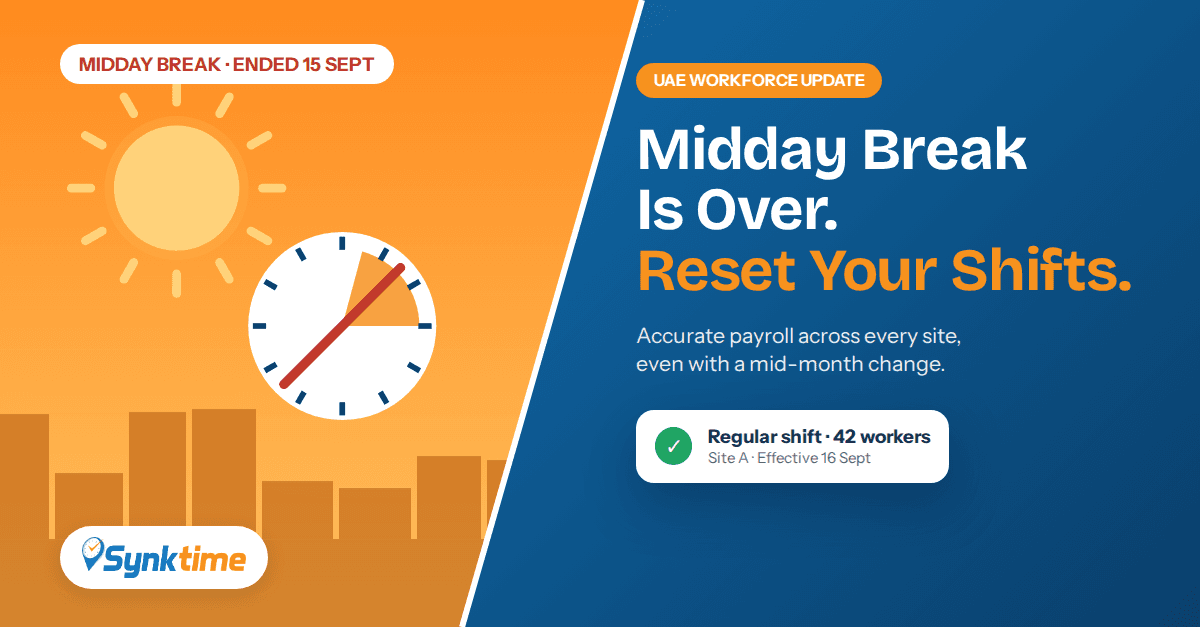
The UAE Midday Break Has Ended: How to Reset Shift Schedules Without Breaking Payroll
The UAE midday break ended on 15 September. Reset outdoor team shifts, fix overtime rules and keep payroll accurate across every site with Synktime.
Synktime Admin
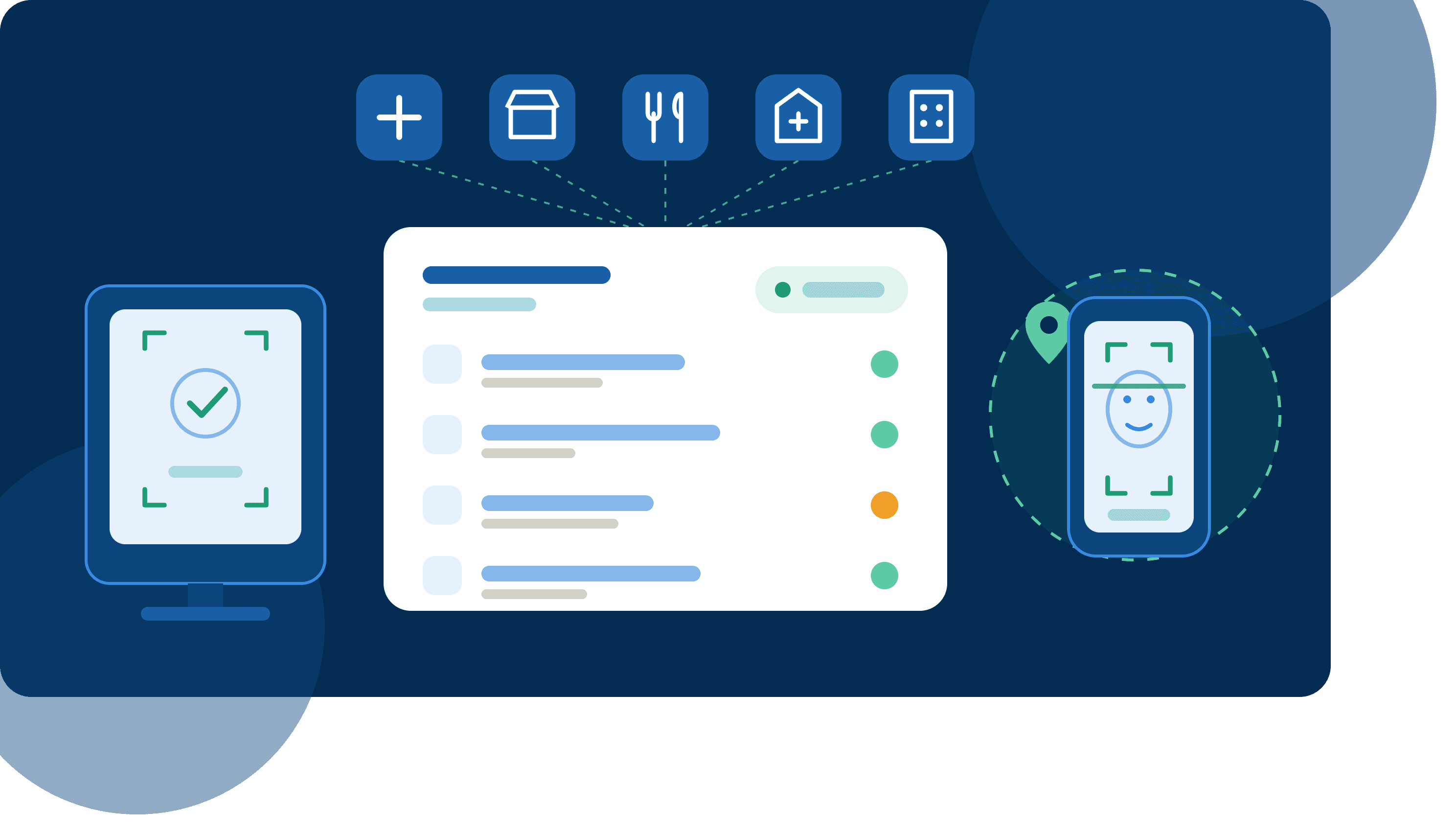
Multi-Branch Attendance System: One Dashboard for Every Outlet
A multi-branch attendance system puts every outlet — pharmacies, shops, restaurants, clinics and offices — on a single dashboard instead of separate registers per location. Staff punch in by face inside a geofence, supervisors mark shifts from a tablet kiosk, and employees check their own attendance history and payslips in a mobile app. Head office sees the whole group in real time; payroll gets one clean export.
Synktime Expert

Workforce Management System in UAE: The 2026 Buyer's Guide for Multi-Branch Employers
A workforce management system in the UAE is cloud software that collects attendance from biometric devices and mobile apps, applies UAE Labour Law rules for working hours and overtime, manages shifts and leave, and sends payroll-ready data to your ERP. For businesses with staff across Dubai, Sharjah, Abu Dhabi and the Northern Emirates, a cloud WFM platform like Synktime replaces spreadsheets and per-branch devices with one dashboard.
Synktime Expert
Workforce Management System in Sharjah: Managing Shifts, Overtime and Labour Attendance in Industrial Operations
A workforce management system in Sharjah automates attendance, shift rotation and overtime for factories, workshops, warehouses and labour-intensive businesses in Sharjah Industrial Area, SAIF Zone, Hamriyah Free Zone and Al Sajaa. Synktime connects to existing ZKTeco and other biometric devices, assigns shifts automatically from punch data, and calculates overtime under UAE Labour Law so payroll is accurate without manual timesheet checks.
Synktime Expert
Workforce Management System in Kuwait: Digital Attendance for PAM Compliance and Inspection Readiness
A workforce management system in Kuwait gives employers electronic attendance, overtime and leave records that can be produced immediately during a Public Authority for Manpower (PAM) inspection, while automating shift rules and overtime under Kuwait Labour Law No. 6 of 2010. Synktime is a cloud WFM platform that connects existing biometric devices across Kuwait City, Shuwaikh, Ahmadi, Farwaniya and Jahra, adds a multi-language mobile app for field staff, and exports payroll-ready data.
Synktime Expert
Workforce Management System in KSA: What Saudi Employers Need in 2026
A workforce management system in KSA is cloud software that records attendance from biometric devices and mobile apps, applies Saudi Labor Law working-hour and overtime rules, and produces payroll data ready for Mudad and the Wage Protection System. Synktime is a cloud WFM platform with Arabic and English interfaces that connects existing ZKTeco and other devices across Riyadh, Jeddah, Dammam and the Eastern Province, with no server in any branch.
Synktime Expert
Workforce Management System in Dubai: How Multi-Branch Groups Run Attendance, Shifts and Overtime in 2026
A workforce management system in Dubai lets a business group manage attendance, shifts, overtime and leave for every branch and trade licence, mainland or free zone, from one cloud dashboard. Synktime is a Dubai-based WFM platform that connects your existing biometric devices, adds a mobile app for field staff, and delivers payroll-ready reports for retail, hospitality, corporate and service businesses.
Synktime Expert
Workforce Management System in Abu Dhabi: Audit-Ready Attendance for Contractors, Healthcare and Service Providers
A workforce management system in Abu Dhabi gives contractors, healthcare groups, energy-services firms and facilities-management companies a tamper-evident attendance record, project-level labour reporting and direct integration with their ERP. Synktime is a cloud WFM platform that connects existing biometric devices across Abu Dhabi, Al Ain, Mussafah, KIZAD and Al Dhafra, applies UAE Labour Law rules automatically, and produces the audit trail that client contracts and inspections require.
Synktime Expert
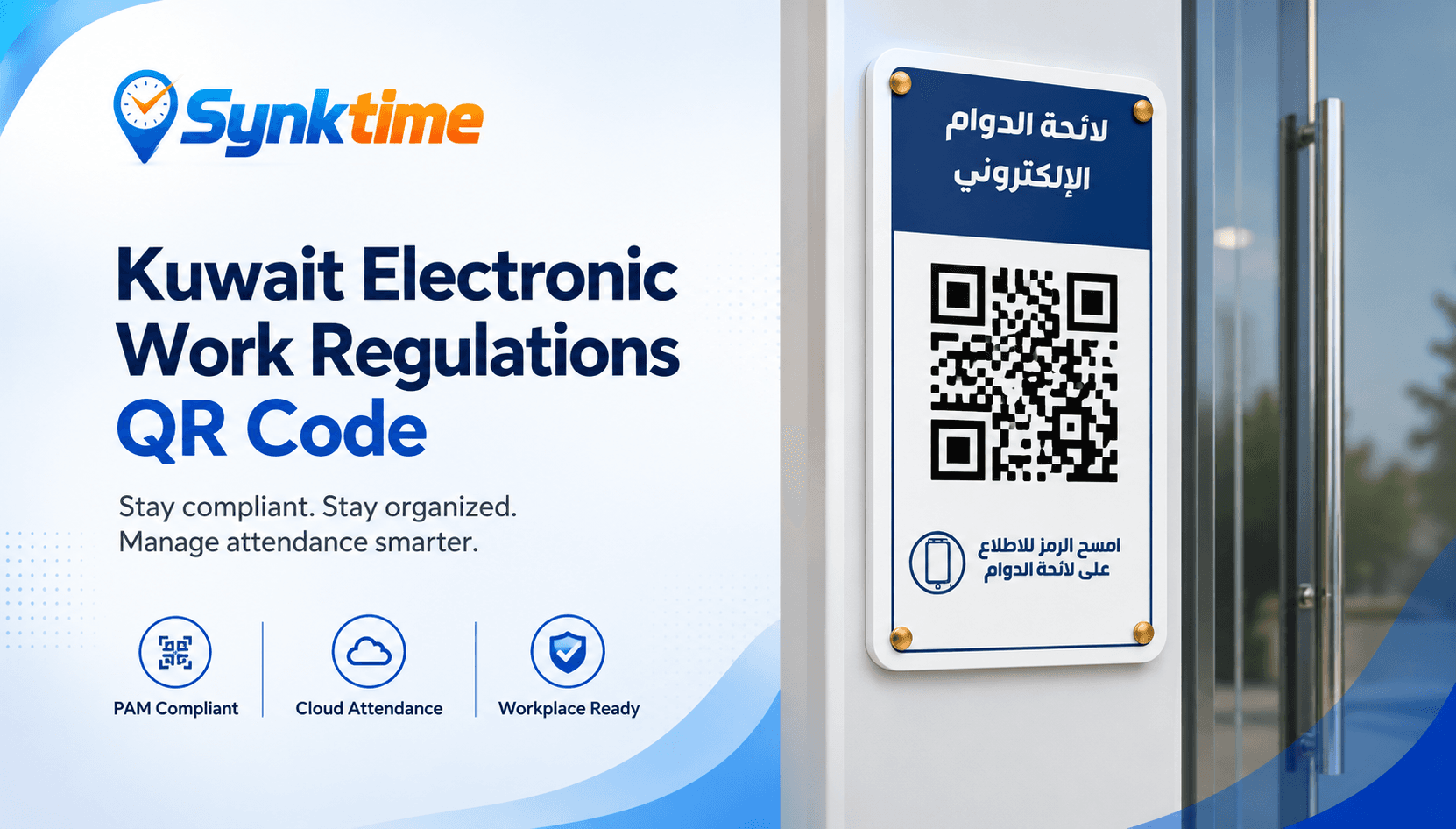
Kuwait Electronic Work Regulations QR Code: What Employers Need to Know
Learn about Kuwait's electronic work regulations QR code requirements, PAM inspections, and how businesses can prepare while managing employee attendance digitally with Synktime.
Synktime Expert, Admin
UAE Attendance Management: Late Coming, Early Leaving & Overtime
Managing employee attendance across multiple branches, shifts and locations can be difficult with Excel and manual processes. Learn how UAE businesses can simplify attendance, late coming, early leaving and overtime tracking.
Synktime Expert
GPS & Geofencing Attendance for Field Staff in UAE: The Complete 2026 Guide
How GPS geofencing attendance works for field staff in the UAE — setup, UAE data protection rules, common pitfalls, and a 30-day rollout plan for 2026.
HR Compliance Expert
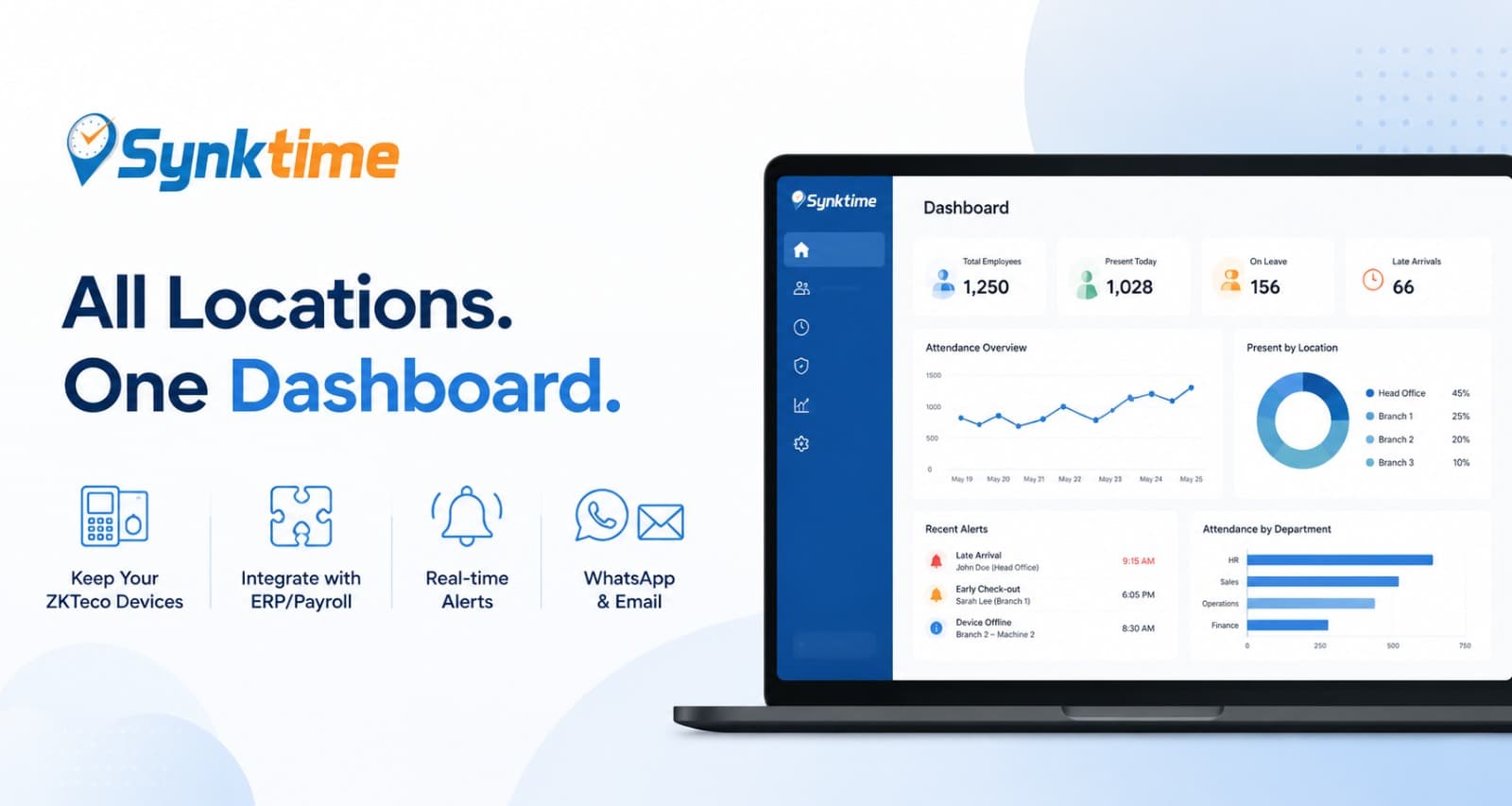
How to Track Attendance Across Multiple Branches, Stores & Clinics in the UAE (Without Switching Your Payroll or Replacing Devices) — 2026 Guide
Manage attendance across multiple branches, stores, clinics & restaurants in UAE from one dashboard. Works with ZKTeco, your ERP, WhatsApp & email alerts.
SynkTime Admin
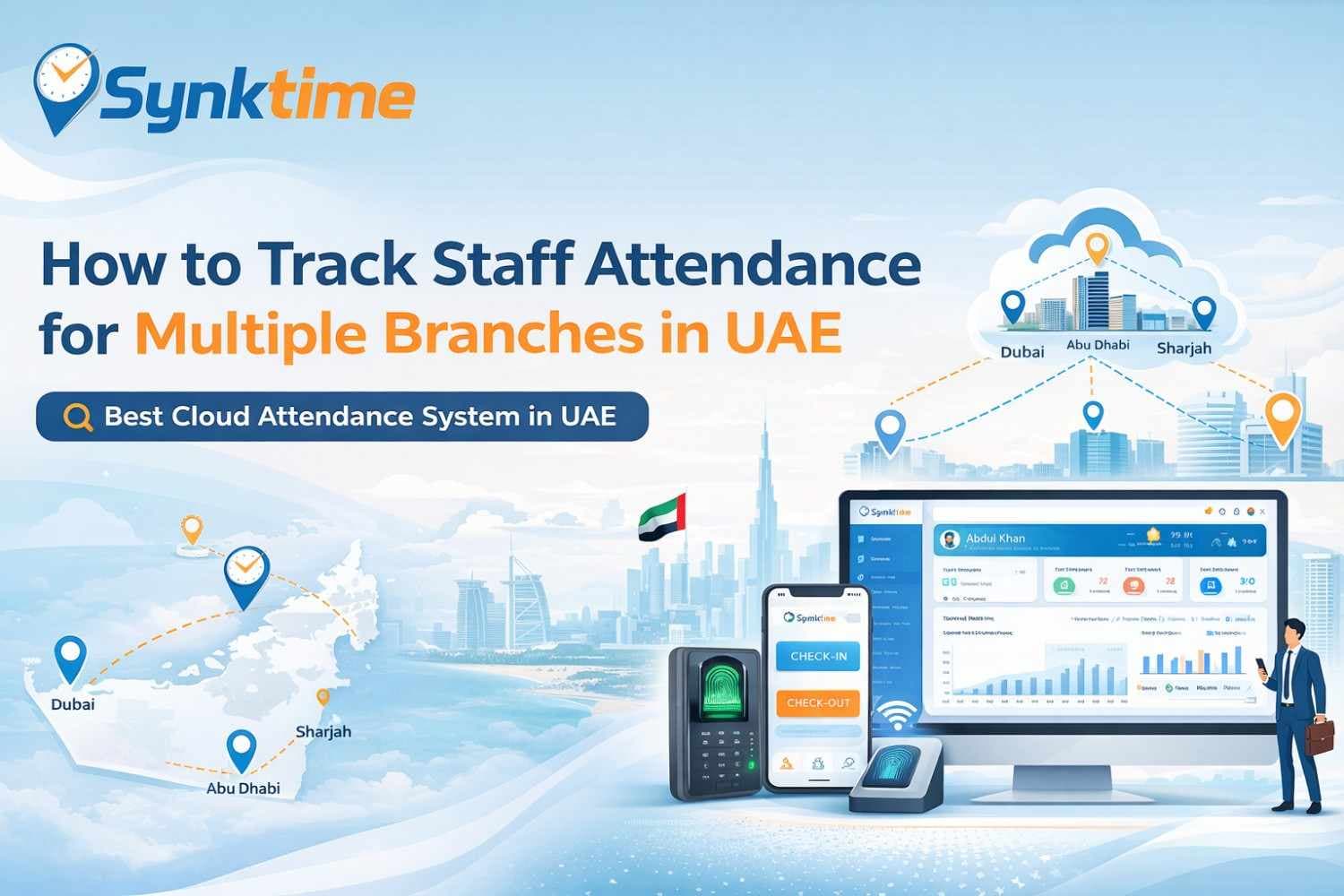
How to Track Staff Attendance for Multiple Branches in UAE
Learn how UAE businesses track staff attendance across multiple branches using cloud and biometric systems with real-time reports.
HR Admin
Time and Attendance Tracking Software in UAE
Looking for the best time and attendance tracking company in UAE? Discover cloud-based, biometric, and mobile attendance solutions for businesses in 2026.
HR Admin
The Future of Workforce Management: Choosing the Best Time and Attendance Solution in UAE 2026
Prepare your workforce for the future. Discover key features of the top Time and Attendance Solution in UAE 2026, covering MOHRE compliance, AI biometrics, and
Synktime Admin
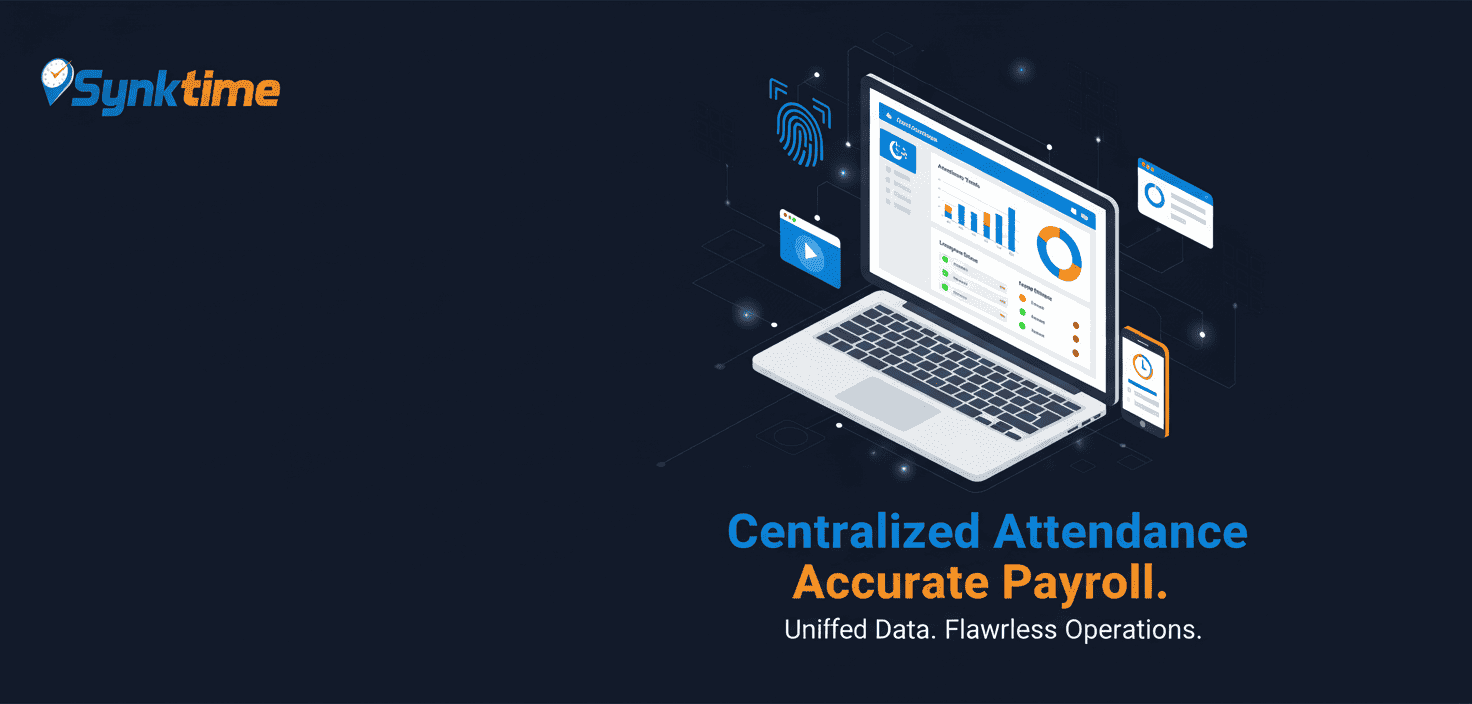
What Is Centralized Attendance Data?
Centralize biometric and mobile attendance with Synktime to reduce errors, simplify HR work, and ensure accurate, compliant payroll every month.
HR Admin
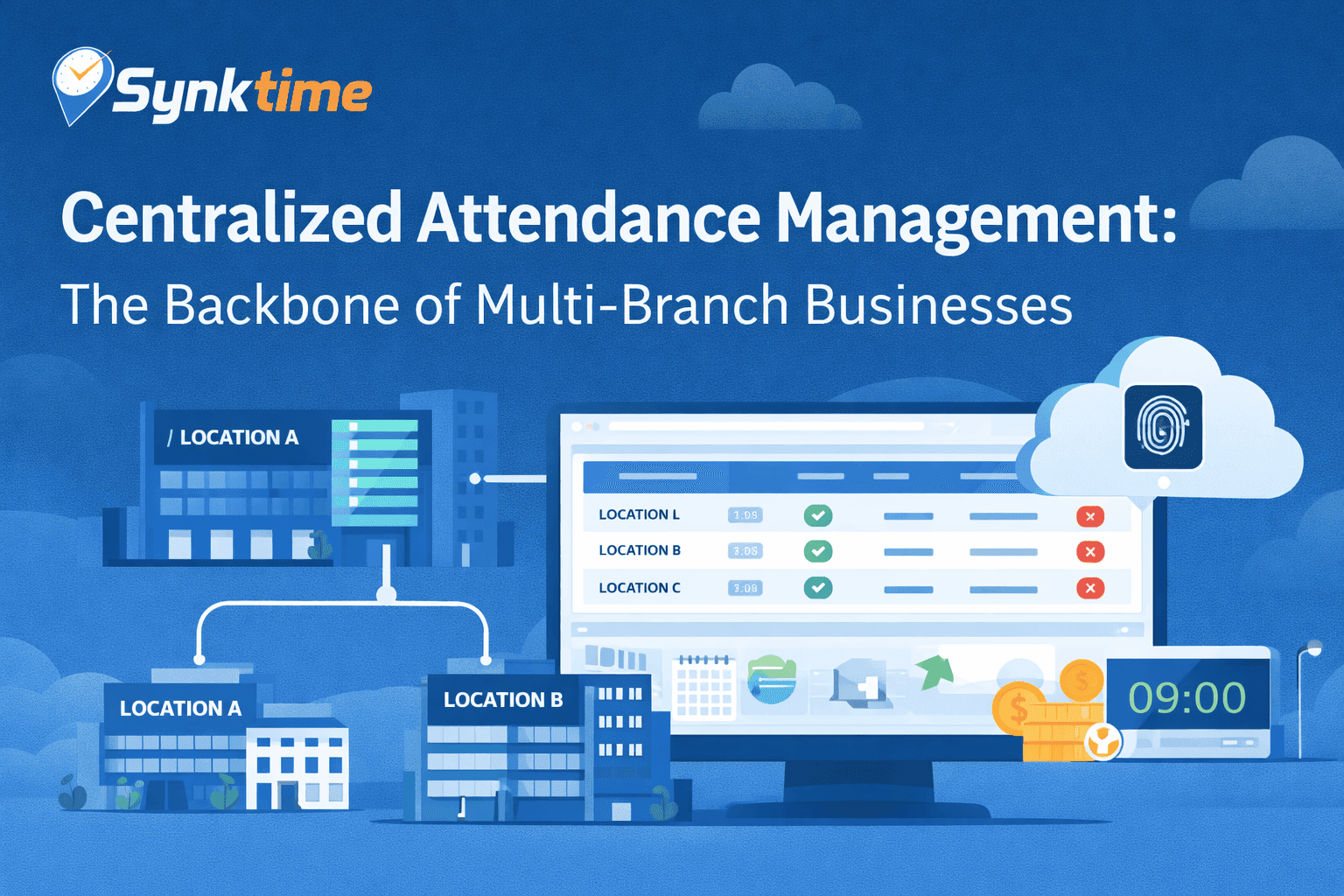
Centralized Attendance Management: The Backbone of Multi-Branch Businesses
Discover why centralized attendance management is essential for multi-branch businesses. Improve payroll accuracy, compliance, and workforce visibility.
HR Compliance Expert
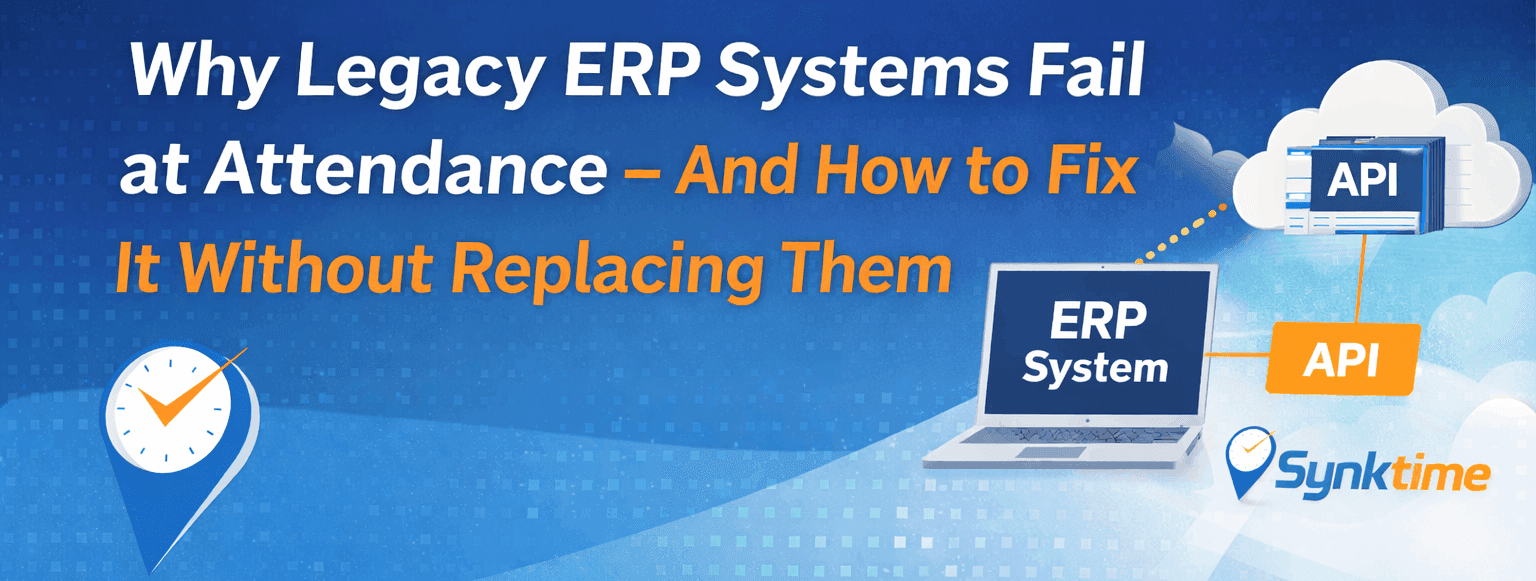
Why Legacy ERP Systems Fail at Attendance – And How to Fix It Without Replacing Them
Legacy ERP systems struggle with modern attendance. Learn how to fix attendance issues using cloud solutions without replacing your existing ERP.
HR Compliance Expert

One Attendance Platform for Every Business: Multi-Branch, Multi-Company & ERP-Ready APIs
Manage multi-branch and multi-company attendance with Synktime. One cloud platform, powerful APIs, and seamless ERP integration.
HR Compliance Expert
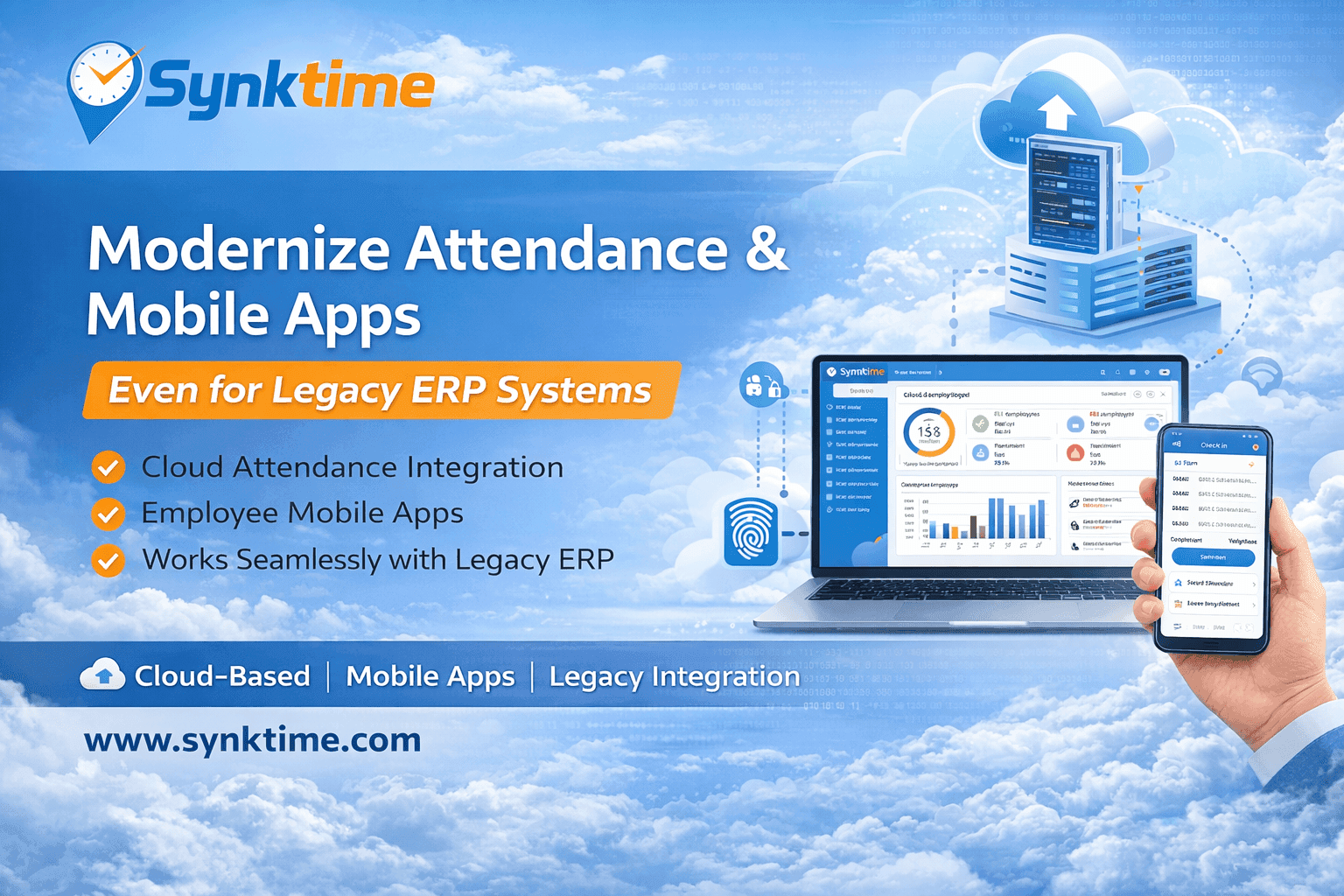
Legacy ERP Systems Shouldn’t Limit Modern Workforce Needs
Using a legacy ERP system? Integrate cloud attendance and employee mobile apps without replacing your ERP. Synktime makes legacy system integration simple.
HR Compliance Expert
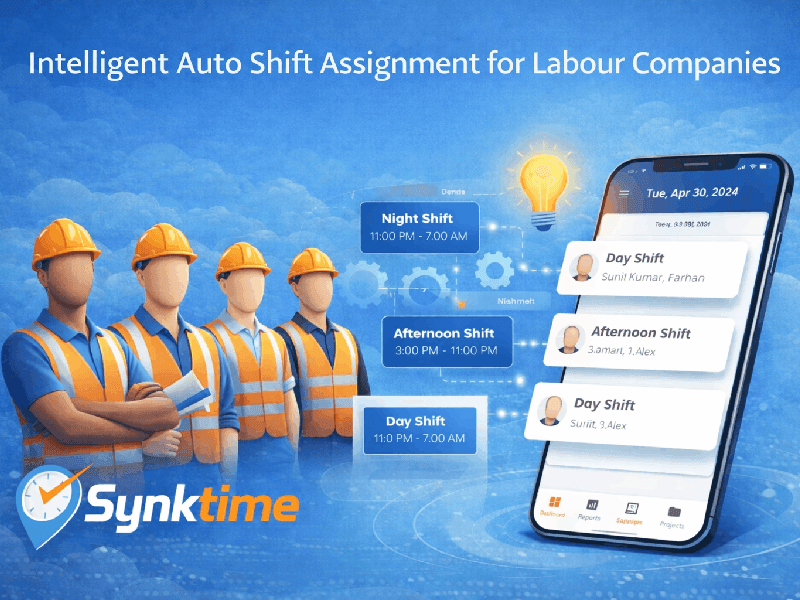
Automatic Shift Control for Large Workforces: How Businesses Manage Multiple Shifts Without Manual Errors
Manage large labor forces with multiple shifts using automatic shift control. Learn how cloud attendance simplifies payroll, overtime, and compliance.
HR Compliance Expert
Cloud Attendance & Biometric Compliance for UAE Businesses (2026 Guide)
Looking for a secure cloud attendance system in the UAE? Synktime offers biometric integration, real-time tracking, and payroll-ready reports for UAE businesses
Synktime Team
Why UAE Businesses Are Switching to Cloud-Based Attendance Management Systems
Synktime is a cloud-based attendance management system in UAE with biometric integration, shift & payroll-ready reports for modern businesses.
HR Compliance Expert

Best Cloud Attendance System in Saudi Arabia (KSA) – 2026 Complete Guide
Looking for a cloud attendance system in Saudi Arabia? Synktime offers biometric & ZKTeco integration, no server, mobile app & KSA-ready reports.
Abu Hamraz, KSA
Revolutionizing Workforce Management: SynkTime Cloud Arrives in UAE and GCC
Discover how SynkTime cloud-based attendance system is revolutionizing workforce management in UAE, Saudi Arabia, and GCC. Real-time tracking, automated payroll, mobile apps. Start free trial.
SynkTime Team
UAE Labor Law 2025: Complete Guide to Attendance Tracking and Compliance
Complete UAE Labor Law compliance guide for attendance tracking. Learn working hours, overtime, leave rules, avoid penalties. Essential for HR managers in Dubai, Abu Dhabi & UAE. Expert insights.
HR Compliance Expert
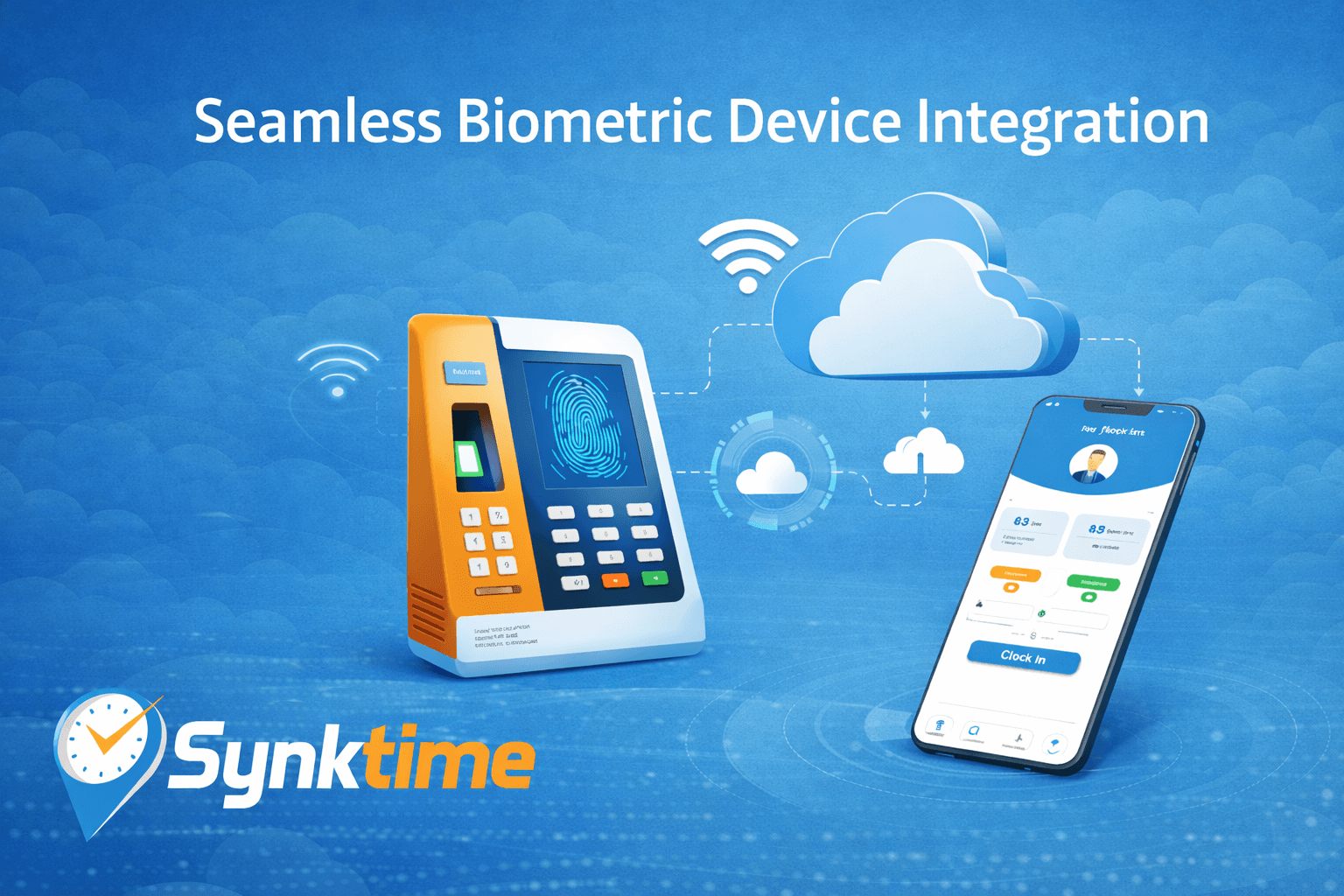
Biometric Attendance Systems in GCC: Complete Guide for 2025
Comprehensive guide to biometric attendance systems in GCC. Compare fingerprint, facial recognition, iris scanning. Learn ROI, implementation, security. Perfect for UAE, Saudi Arabia businesses.
Technology Solutions Expert